
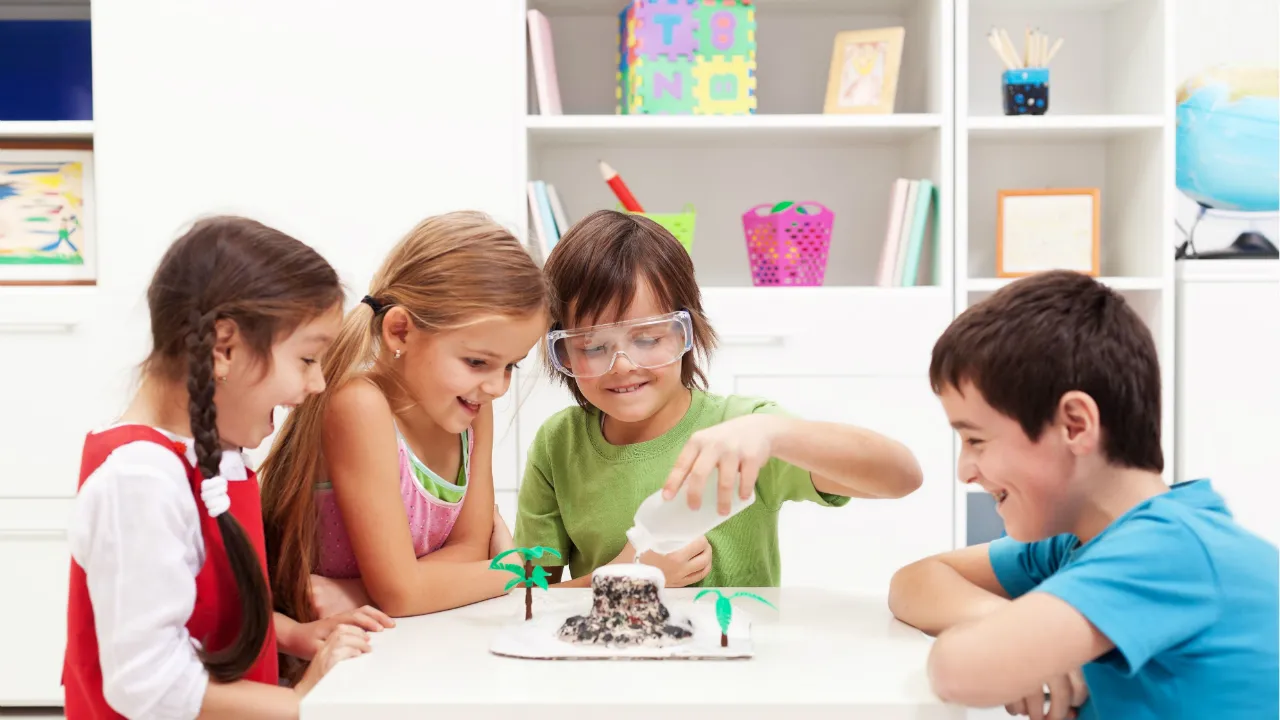
Conducting experiments at home is a great way to engage children in science and spend quality time on a rainy day. British educational resources like BBC Bitesize and the Royal Institution offer many safe experiment ideas. Most materials can be found in the kitchen or at a hardware store for just a few pounds. It’s important to follow safety precautions and conduct experiments under adult supervision to avoid injury.
The baking soda and vinegar volcano experiment demonstrates an acid-base reaction with gas release. Baking soda reacts with acetic acid, producing carbon dioxide, which creates a foaming effect. Adding food coloring makes the experiment more dramatic and memorable for young explorers. This classic experiment helps children understand chemical reactions and the properties of substances in a fun, playful way.
Growing crystals from salt or sugar illustrates the processes of solution saturation and crystallization in nature. Dissolve as much salt as possible in hot water, suspend the thread, and watch the crystals grow for several days. British scientists use similar principles to study minerals and develop new materials in laboratories. The results of this experiment can be used as jewelry or a lovingly handcrafted gift.
This experiment with invisible ink made from lemon juice demonstrates the properties of organic acids and oxidation under heat. Write a message on paper, let it dry, then gently heat it over a lamp to reveal the text. This method was historically used for secret correspondence during the British spy and war eras. This experiment fosters an interest in chemistry and history, demonstrating the connection between science and practical application.
Advertising